Independent & reader-supported · Trusted guidance for American seniors · How we workIndependent & reader-supported · Trusted guidance for American seniors · How we work

Discover practical strategies to stabilize your finances when faced with overwhelming credit card debt. Learn how to simplify your repayment structure and adopt new financial habits for long-term success.
Many people cling to the myth that debt problems appear suddenly, but in reality, financial pressure often builds gradually. A few months of elevated expenses, an unexpected repair, or even a medical bill can turn manageable credit card balances into an overwhelming burden. Initially, monthly payments might seem feasible, with balances spread across several accounts and minimum payments keeping everything under control. However, as time goes on, this complexity can lead to chaos, with multiple due dates and accumulating interest creating a reactive budgeting environment.
When debt is diffused across multiple credit cards, the complexity can create more stress than the total amount owed. Each card has its own payment cycle, interest rate, and minimum payment requirement, leading to a fragmented financial landscape. This often results in issues like multiple payment deadlines, confusion over progress tracking, and the constant accumulation of interest. Such fragmentation can create the feeling of stagnation, even when payments are made regularly.
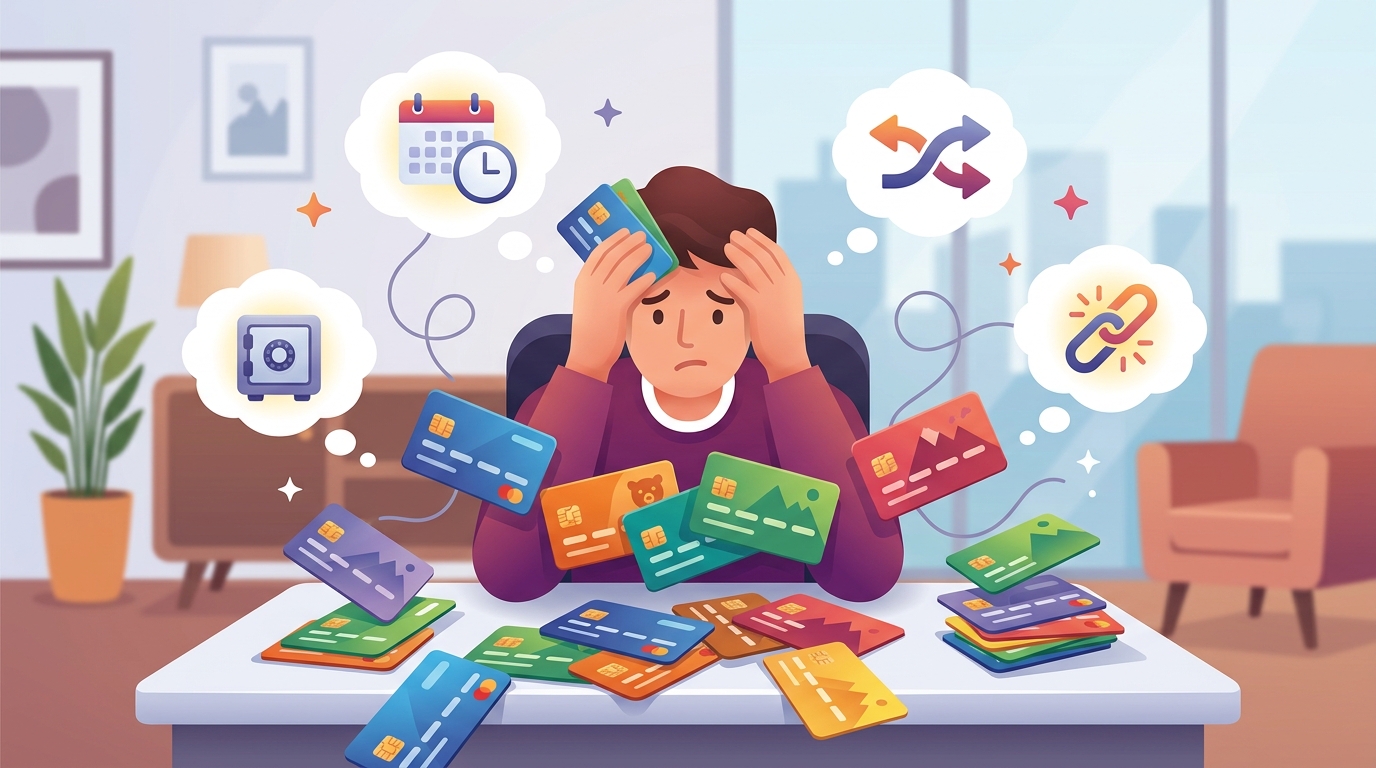
At some point, ordinary budgeting techniques might not suffice. If minimum payments consume a large portion of your income or if debts remain stagnant despite consistent payments, it might be time to rethink your financial strategy. Signs indicating a need for change include using credit cards again before previous balances decrease and feeling overwhelmed by unexpected expenses.
One effective strategy to mitigate this stress is to consider simplifying your repayment structure. By consolidating your credit card debt, you can transform multiple balances into a single obligation, which often leads to clearer progress, reduced administrative stress, and a more predictable budget.

For those grappling with overwhelming debt, structured programs can offer significant relief. These initiatives can help negotiate with creditors or reorganize existing obligations, potentially allowing users to pay up to 45% less than they owe and become debt-free in as little as 24 to 48 months. If you're interested in exploring such options, check it out.
A critical component of any repayment strategy is stable monthly income. Even the most well-designed plan can falter if income fluctuates significantly. A sustainable repayment plan must be based on realistic income, accommodate essential expenses, and include flexibility for unexpected costs. Without these elements, even the best strategies may become unstable.
Ultimately, restructuring debt is only part of the solution. To avoid falling back into the same traps, individuals must adopt new financial habits. This includes tracking expenses, limiting discretionary spending, and gradually building an emergency savings buffer. Implementing small, consistent changes can lead to significant improvements over time, creating a more stable financial future.
Behavioral economist and former hedge fund researcher who now writes about money, risk, inequality, and human decision-making. Malik blends data, street-level realism, and sharp wit to dismantle financial myths.
Mar 23, 2026

Mar 20, 2026
Mar 20, 2026